
By FCN Staff
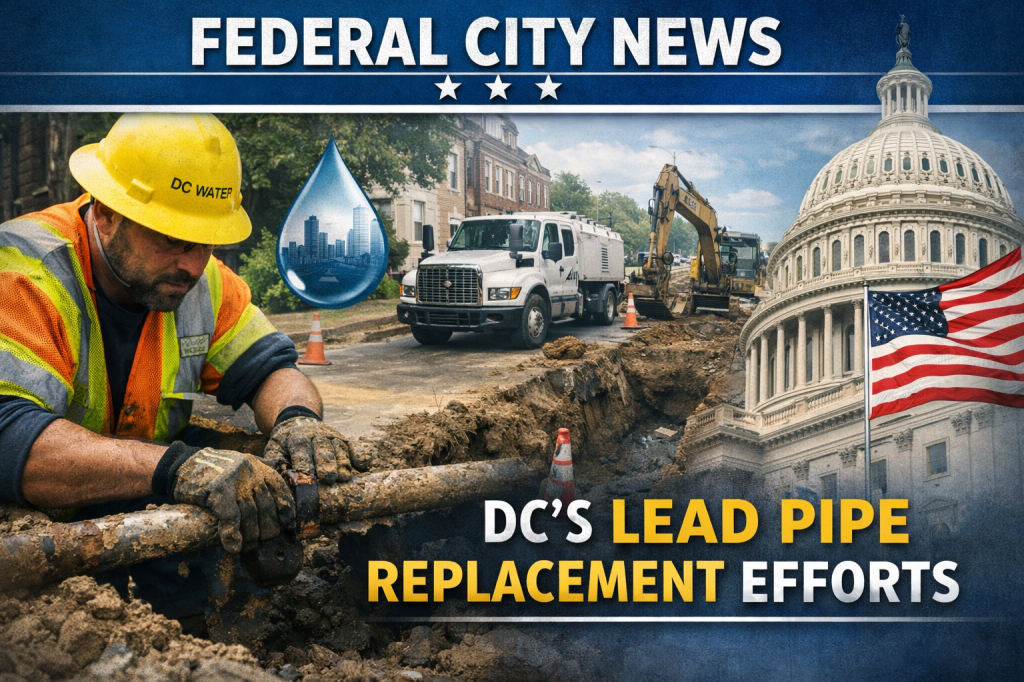
Washington, D.C. officials are touting a significant public health milestone: according to a recent report from The Hill Rag, DC Water has now replaced 11,000 lead service lines across the District.
That number is substantial. It represents years of infrastructure work, tens of millions of dollars in capital investment, and a recognition that the city’s aging water system requires serious attention. But while the milestone deserves acknowledgment, it also raises a broader question: How much progress has truly been made — and how much remains?
A Long Shadow From the Past
Washington’s lead pipe problem is not new. The city faced a major water crisis in the early 2000s when elevated lead levels were discovered in drinking water. Since then, the District has operated under stricter oversight, public reporting requirements, and federal pressure to modernize its system.
The replacement of 11,000 lead service lines signals forward movement. It reflects a growing national awareness of lead contamination risks following high-profile crises in cities like Flint and Newark. Unlike some jurisdictions that delayed action, D.C. has leaned into infrastructure upgrades and transparency reporting in recent years.
Still, this milestone is only part of the story.
The Scale of the Challenge
While 11,000 lines have been replaced, thousands more remain. Estimates over the years have suggested that tens of thousands of service lines across the District either contained lead or were of unknown material. The exact number continues to evolve as records are updated and inspections confirm pipe materials.
This is where nuance matters. Replacing 11,000 lines is progress. But for families living in older rowhomes, especially east of the river, the question is immediate: Is my home next? And how long will it take?
For residents in Wards 7 and 8 — communities historically underserved in infrastructure investment — lead remediation carries both public health and equity implications.
Funding, Accountability, and Priorities
DC Water operates independently but works closely with the D.C. Council and federal partners. Infrastructure upgrades are expensive. Full lead service line replacement can cost thousands of dollars per property.
The District has used a mix of local funding, ratepayer dollars, and federal infrastructure support — particularly following passage of the bipartisan infrastructure law during the Biden administration — to accelerate replacements.
That’s the good news.
The harder question is sustainability. Rate increases hit working families. Federal dollars fluctuate. And as political leadership shifts at both the District and federal levels, infrastructure commitments can become bargaining chips in broader budget fights.
A center-right perspective doesn’t oppose infrastructure investment — especially when it addresses core public health risks. But it does demand transparency, efficiency, and measurable results. Residents deserve to know:
- How many lead lines remain?
- What is the timeline for full removal?
- How are neighborhoods prioritized?
- What are the long-term cost implications?
Trust and Public Communication
One lesson from past water crises nationwide is that trust is fragile. Technical compliance is not enough; public confidence matters.
DC Water’s public reporting and mapping tools have improved significantly over the last decade. Still, many homeowners remain confused about whether their private-side service lines contain lead, who is responsible for replacement, and what financial assistance is available.
If 11,000 replacements are a milestone, the next phase must focus on clarity and speed.
Why This Matters Now
Infrastructure rarely makes headlines unless something goes wrong. But water systems are foundational. Clean drinking water is not partisan — it is essential.
As the District debates budgets, public safety spending, school funding, and housing policy, water infrastructure competes for attention. Yet failing to complete lead line replacement would carry long-term health costs far greater than the upfront expense.
The milestone reported by The Hill Rag shows movement in the right direction. The question now is whether D.C. leadership will finish the job — and whether they will do so with urgency, fairness, and fiscal discipline.
Because replacing 11,000 lines is progress.
Replacing them all is responsibility.
 Federal City News