
By FCN Staff
WASHINGTON, D.C. — After weeks of emergency response operations, DC Water says repairs to the collapsed Potomac Interceptor are progressing, with federal reinforcements now on site to help stabilize the area and prevent further environmental damage.
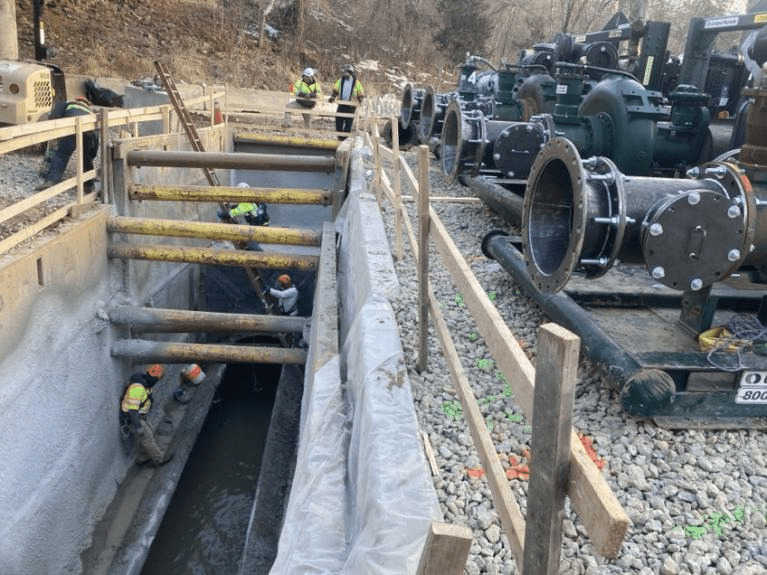
According to recent updates from DC Water, crews have successfully reached the collapsed section of the massive sewer tunnel that ruptured earlier this month, triggering bypass pumping operations and raising fears of sewage discharge into the Potomac River.
The U.S. Army Corps of Engineers has now stepped in to strengthen riverbank protections near the failure site — a move that underscores the seriousness of the infrastructure breakdown and the risk it poses to the region’s waterways.
What’s Been Accomplished So Far
DC Water reports:
- Successful bulkhead gate installation and testing
- Expanded bypass pumping to manage wastewater flow
- Removal of large rocks and debris from the damaged pipe
- Ongoing structural assessment of the collapsed section
- No reported new surface water overflows in recent days
Crews are racing against weather events, including recent rain and snow, which could stress an already fragile system. Officials say preventative measures are in place to reduce flooding risks during storms.
The Army Corps’ involvement focuses on fortifying shoreline protections to prevent erosion or additional collapse near the Potomac River — a critical step given the environmental sensitivity of the region and downstream impacts on Maryland and Virginia communities.
A Wake-Up Call for Aging Infrastructure
The Potomac Interceptor is a major artery in the District’s wastewater system, carrying millions of gallons daily. Its collapse has exposed vulnerabilities in aging underground infrastructure — much of which predates modern population growth and regulatory standards.
For center-right observers, the issue highlights two persistent problems:
- Deferred maintenance in urban infrastructure
- Regulatory and oversight gaps despite high utility rates and environmental spending
Residents pay among the highest water and sewer rates in the country. Yet a catastrophic collapse still occurred.
That raises uncomfortable but necessary questions:
- Was preventative inspection adequate?
- Were capital reserves sufficient?
- Did leadership act early enough?
- How transparent has DC Water been with the public?
Federal Reinforcements — Local Responsibility
While the Army Corps’ involvement adds expertise and manpower, critics argue it should not take federal intervention to stabilize a local utility failure.
Infrastructure resilience is often championed in policy speeches — but real-world performance is what matters. D.C. leaders have long touted sustainability initiatives and green infrastructure projects. This event tests whether foundational systems received equal priority.
Environmental Stakes
The Potomac River is not only a source of regional recreation and drinking water; it is a shared ecological asset for Maryland, Virginia, and the District.
Although DC Water reports no ongoing surface water overflows, the initial rupture raised legitimate environmental concerns. Public trust will depend on full disclosure of water quality monitoring results and long-term repair timelines.
The Bigger Picture
This is not just a sewer story. It is a governance story.
The Potomac Interceptor collapse underscores:
- The fragility of legacy infrastructure
- The cost of delayed capital investment
- The need for accountability in publicly managed utilities
- The risks of concentrating critical systems without redundancy
As repairs move forward, residents deserve more than progress updates. They deserve transparency, independent review, and a comprehensive plan to ensure this never happens again.
For now, the site remains active, the Army Corps remains on guard, and the region watches closely — hoping that the next heavy rain won’t expose another weak link beneath the surface.
 Federal City News