
By FCN Staff
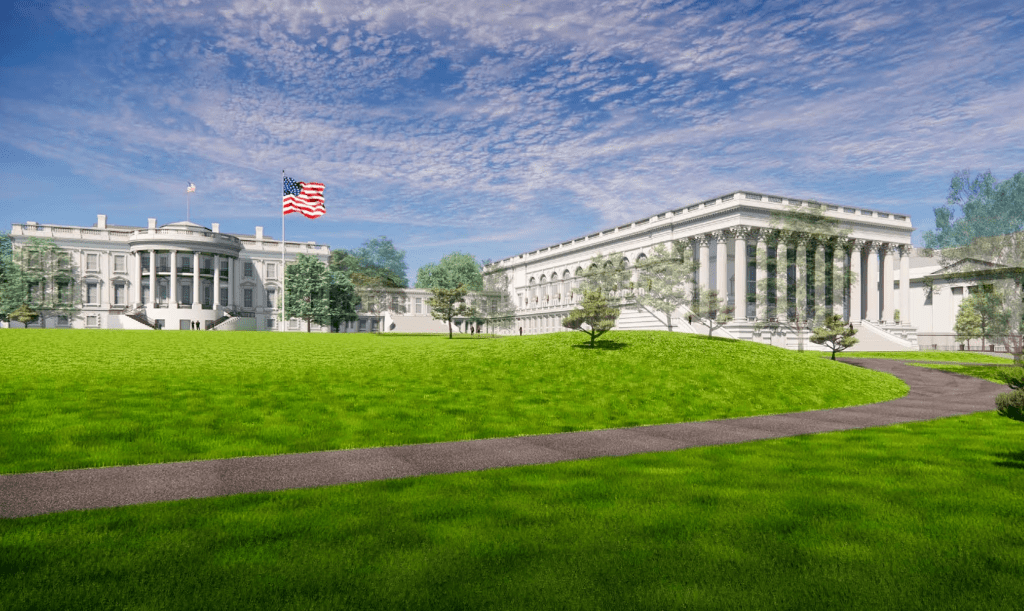
In a significant development for the future of official state events in Washington, plans for a new ballroom at the White House have reportedly cleared review from federal fine arts authorities — paving the way for what supporters call a long-overdue modernization of the historic complex.
According to reporting from The Washington Post, the proposal to construct a formal ballroom on the White House grounds received approval from the U.S. Commission of Fine Arts, an influential body that reviews design changes to prominent federal properties in the nation’s capital.
For decades, presidents of both parties have relied on temporary tents erected on the South Lawn to host large-scale state dinners, diplomatic receptions, and major ceremonial events. Those structures, while functional, have often been criticized as inelegant, weather-dependent, and costly to assemble and dismantle repeatedly.
Supporters of the ballroom plan argue that a permanent, architecturally integrated structure would solve those logistical challenges while elevating the experience for visiting dignitaries.
A Long-Discussed Idea Finally Moving Forward
The concept of adding a formal ballroom to the White House is not new. Multiple administrations have explored expansion options to accommodate growing diplomatic and ceremonial needs. However, proposals frequently stalled due to aesthetic concerns, funding debates, or preservation sensitivities.
With fine arts approval now in hand, proponents say the project demonstrates that modernization and historic preservation are not mutually exclusive.
Advocates emphasize that any addition must respect the architectural integrity of the White House while ensuring the executive residence remains functional in the 21st century. If carefully designed and funded responsibly, they argue, the ballroom could become a lasting asset to the presidency — much like earlier expansions that were controversial in their time but later embraced as part of the historic fabric.
Ending the “Tent Era”
Critics of temporary event structures have long questioned why the world’s most powerful nation relies on fabric pavilions for formal state occasions. Presidents routinely host world leaders, military ceremonies, and major cultural events that require seating beyond the capacity of the State Dining Room.
A permanent ballroom would:
- Provide climate-controlled space for larger diplomatic gatherings
- Reduce recurring costs associated with tent construction
- Improve security and operational efficiency
- Enhance the ceremonial prestige of state events
From a center-right perspective, the move reflects a practical approach: invest once in durable infrastructure rather than continuing to spend taxpayer dollars on temporary solutions year after year.
Preservation Concerns and Architectural Oversight
Approval by federal fine arts authorities suggests that design modifications have addressed concerns about scale, visual harmony, and historical character. In Washington, particularly within the ceremonial core of the city, architectural oversight is taken seriously — and for good reason.
By clearing review, the project appears to have satisfied the requirement that any addition complement — rather than overwhelm — the existing structure.
Washington has a long history of expanding federal buildings to meet evolving needs. The Capitol itself has undergone major extensions. The White House has seen additions such as the West Wing and East Wing, which today are considered integral parts of the complex.
Symbolism and Statecraft
Beyond logistics, the proposal carries symbolic weight.
The White House is not merely a residence — it is the physical stage of American diplomacy. When foreign leaders visit Washington, the setting communicates stability, strength, and national confidence.
A thoughtfully designed ballroom could enhance that message, reinforcing America’s stature while improving the practical realities of hosting international partners.
The Bigger Picture
Large-scale infrastructure investments often become political flashpoints. But in this case, the approval process suggests a measured and institutional review rather than unilateral action.
For many observers, the key questions now turn to final design details, funding structure, and timeline. If executed responsibly, the ballroom could join the ranks of previous White House expansions that were once debated but ultimately embraced.
At a time when much of Washington feels gridlocked, the fine arts approval represents something rare: a tangible project moving forward through established review channels.
Whether one views the ballroom primarily as modernization, symbolism, or logistical necessity, its approval signals a recognition that even the nation’s most historic buildings must evolve to meet present-day demands.
 Federal City News