By Federal City News Staff
As the fallout from the Potomac Interceptor collapse continues to ripple through the region, Muriel Bowser has formally requested federal assistance through a Presidential Emergency Disaster Declaration, seeking 100% reimbursement for costs incurred by the District and DC Water.
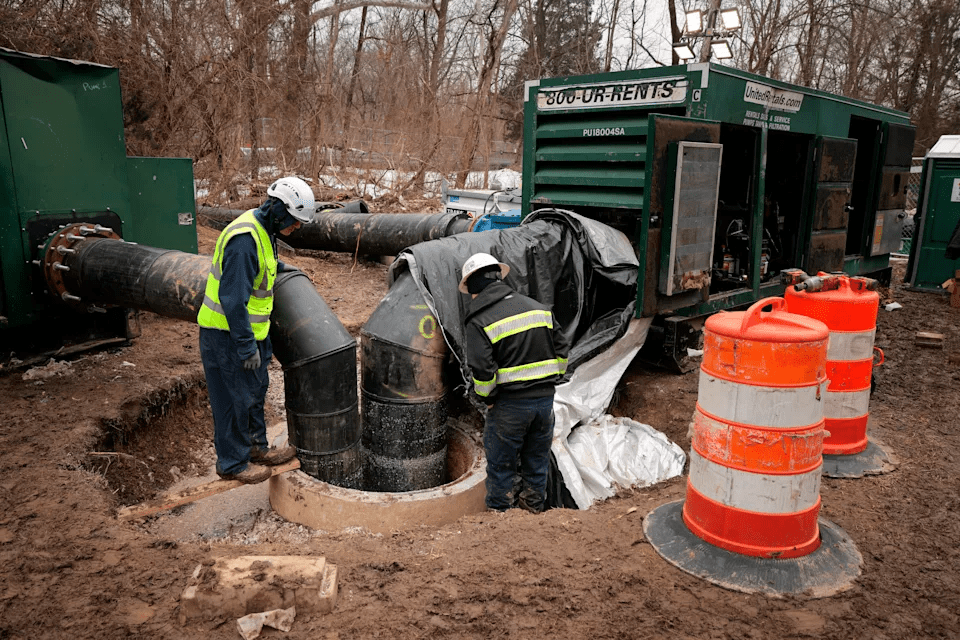
The move comes nearly a month after the catastrophic wastewater infrastructure failure — now described as the largest sewage spill in U.S. history — forced emergency bypass pumping into the C&O Canal and raised environmental alarms along the Potomac River.
What Bowser Is Asking For
According to the mayor’s release, the District is requesting:
- Full federal reimbursement for emergency response costs
- Direct assistance to accelerate repairs
- Federal coordination to support environmental remediation efforts
Bowser declared a local public emergency in order to trigger the federal request process, arguing that the financial burden of the response should not fall solely on District taxpayers.
On its face, the request appears reasonable. The Potomac Interceptor is a critical piece of regional infrastructure serving multiple jurisdictions. The environmental impact extends beyond D.C. boundaries.
But critics say the timing raises questions.
A Month of Silence, Then a Federal Ask
For weeks following the initial rupture, many residents expressed frustration over limited public communication from city leadership. Updates came primarily from DC Water engineers rather than the mayor’s office. Meanwhile, regional political tensions escalated, particularly between Maryland and federal officials.
Only after public pressure mounted did the mayor formally escalate the matter to the White House.
The optics are difficult to ignore.
When a disaster strikes — especially one affecting drinking water, tourism, public health, and the Chesapeake Bay watershed — voters expect proactive leadership. That means clear communication early and often, coordination with neighboring states, and visible command presence.
Instead, much of the narrative has centered on reimbursement rather than responsibility.
Who Owns the Pipes — And Who Owns the Response?
Technically, the damaged interceptor is managed by DC Water. Maryland and Virginia are also impacted by wastewater flows and downstream contamination. The Potomac River does not recognize jurisdictional boundaries.
But residents don’t vote for utility authorities. They vote for elected leaders.
And when infrastructure fails at this scale, the question is not simply who pays — it is who leads.
If federal funds are approved, taxpayers nationwide will shoulder part of the cost. That makes transparency even more critical. What caused the failure? Were warning signs missed? Was maintenance deferred? What safeguards are in place to prevent recurrence?
These are the questions the public deserves answered before writing a blank check.
The Bigger Infrastructure Warning
The Potomac Interceptor collapse should serve as a wake-up call across the region. Aging underground infrastructure — often ignored because it is out of sight — can quickly become an environmental and fiscal catastrophe.
Washington has spent heavily on surface-level initiatives and high-visibility projects. But sewer systems, tunnels, and pipes are less glamorous — and far more essential.
The federal government may provide emergency assistance. But emergency funding is not a substitute for long-term infrastructure discipline.
Leadership in a Regional Crisis
The District is right to seek help if the damage meets federal disaster criteria. No city should face an unprecedented infrastructure collapse alone.
However, leadership requires more than reimbursement requests. It requires urgency, transparency, and coordination — especially in a region where political leaders often prefer finger-pointing over partnership.
The Potomac River is a shared resource. The Chesapeake Bay is a shared responsibility. And public trust is a shared burden.
The coming weeks will determine whether this becomes a story of recovery — or a case study in avoidable mismanagement.
Federal City News will continue to monitor federal response decisions, repair timelines, environmental testing data, and cost projections as they become available.
 Federal City News