
By FCN News
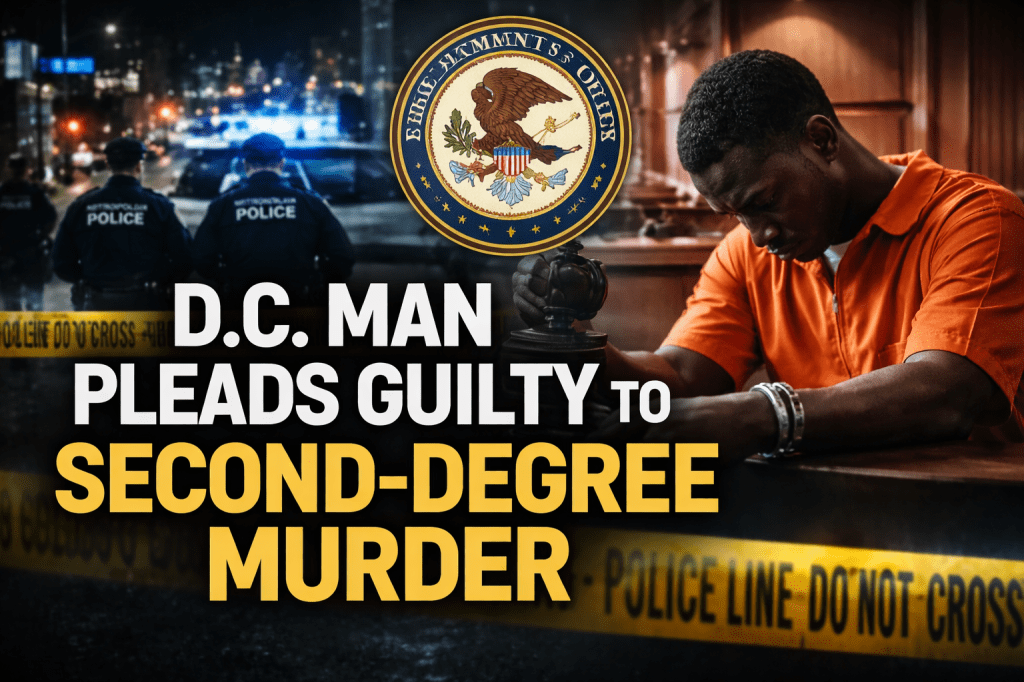
A District man has pleaded guilty to second-degree murder in a case that underscores an uncomfortable reality for Washington: while some crime metrics fluctuate year to year, the damage done by violent crime is permanent.
According to the U.S. Attorney’s Office for the District of Columbia, the defendant admitted responsibility for a fatal incident that took place in the District. The plea agreement brings the case closer to sentencing, sparing the victim’s family a prolonged trial — but it also highlights the broader public safety challenges facing the city.
The investigation involved the Metropolitan Police Department and federal prosecutors, working through the Superior Court of the District of Columbia system that handles the bulk of serious local offenses.
Accountability Matters — But So Does Prevention
A guilty plea to second-degree murder is significant. It means the defendant has acknowledged responsibility for a killing without premeditation, but with malice — a distinction that carries heavy prison time and reflects the seriousness of the offense.
The question for District residents is not whether this individual will be held accountable — he will be. The deeper issue is how many such cases it takes before the city takes a harder look at deterrence, enforcement, and the consequences of violence.
Over the past several years, Washington has wrestled with swings in violent crime, including homicides and armed assaults. While city officials often point to broader social causes — poverty, trauma, lack of services — there is growing public frustration over what many see as inconsistent prosecution, reduced penalties for repeat offenders, and policies that can unintentionally signal leniency.
The Role of the Federal Prosecutor
Unlike most cities, Washington’s local felonies are prosecuted by a federal office — the U.S. Attorney’s Office for D.C. That unique structure means that crime policy debates in the District often intersect with national politics.
When serious cases result in guilty pleas, it reinforces the importance of a functioning prosecution pipeline. But it also raises ongoing questions about charging decisions, plea deals, and how many cases are declined before they ever reach this stage.
For residents in neighborhoods that have experienced repeated shootings, one guilty plea is cold comfort if the broader pattern continues.
A City at a Crossroads
The District has invested heavily in violence interruption programs, youth outreach, and community-based prevention efforts. Those programs may have merit. But they cannot replace the basic expectation that violent crime will be swiftly prosecuted and meaningfully punished.
Second-degree murder is not a policy debate. It is a life ended.
If Washington is serious about restoring confidence in public safety, it must pursue a two-track strategy:
- Clear, consistent consequences for violent offenders
- Strong support systems that prevent violence before it starts
Residents deserve both.
This latest plea brings justice a step closer for one family. The city’s challenge is ensuring that fewer families need justice in the first place.
 Federal City News