By FCN Staff
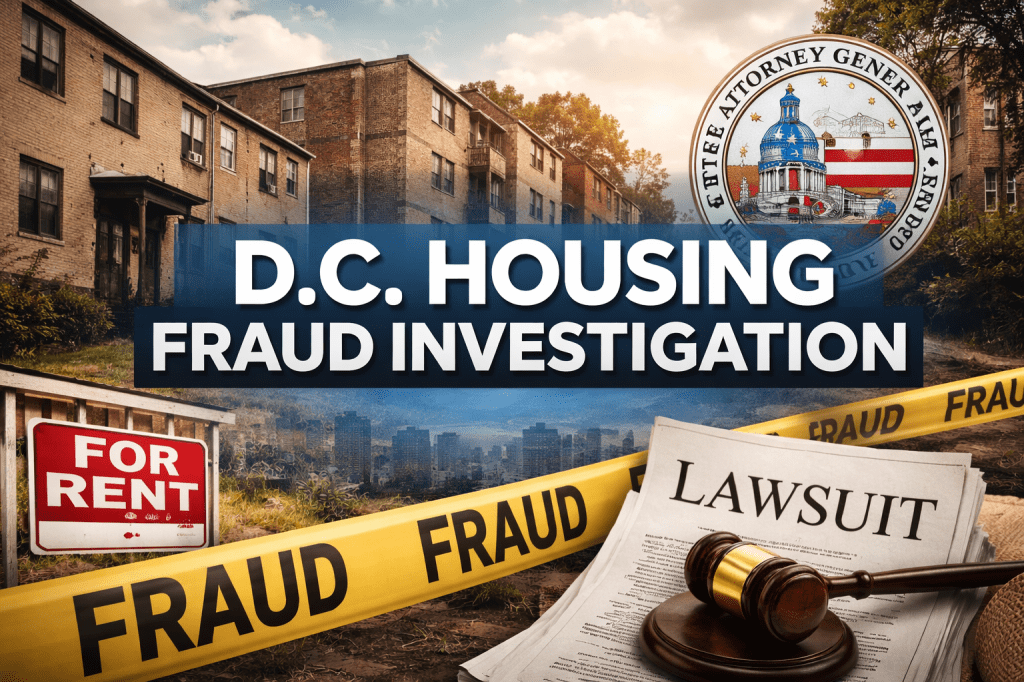
The District’s affordable housing crisis took another turn this week as the Office of the Attorney General for the District of Columbia filed a sweeping civil lawsuit against a Ward 7-based, family-run real estate operation accused of running a years-long fraud scheme involving rent control violations, subsidy abuses, and dangerous housing conditions.
According to the complaint, Attorney General Brian Schwalb alleges that the Razjooyan family—led by a mother and her sons—engaged in systematic misconduct across multiple apartment buildings in Southeast Washington. The lawsuit accuses the defendants of falsifying records, violating rent control laws, failing to maintain properties, and improperly collecting rent subsidies while allegedly allowing serious code violations to persist.
Allegations: Fraud, False Claims, and Unsafe Conditions
The civil suit reportedly invokes racketeering-style claims, alleging coordinated misconduct that goes beyond isolated landlord negligence. Among the accusations:
- Charging illegal rent increases in rent-controlled units
- Failing to register properties properly under District law
- Collecting housing subsidies while allegedly misrepresenting compliance
- Ignoring serious housing code violations affecting tenant safety
The Attorney General’s office characterizes the conduct as a “scheme,” suggesting intent and coordination rather than administrative oversight errors.
If proven, the allegations would represent not just poor management—but deliberate exploitation of both vulnerable tenants and public housing programs.
A Crisis Within a Crisis
The case lands at a politically sensitive moment. Washington, D.C. is facing an affordability crunch marked by soaring rents, stagnant wages, and increasing reliance on public subsidies. In neighborhoods like Ward 7, many families depend on rent-controlled units and housing vouchers to remain in the city.
When landlords allegedly abuse those systems, it fuels public anger and undermines confidence in housing policy itself.
But the lawsuit also raises a broader question: How did this persist long enough to require a sweeping RICO-style civil action?
D.C. is one of the most regulated rental markets in the country. Landlords must comply with registration requirements, rent caps, inspection standards, and reporting mandates. Yet enforcement often lags behind complaints, and chronic violators can operate for years before facing meaningful consequences.
Enforcement vs. Overreach
While most District residents will agree that slumlords and fraud should be prosecuted aggressively, there is also a legitimate concern about selective enforcement and political signaling.
D.C.’s regulatory framework is already so complex that smaller landlords routinely cite confusion and compliance burdens. When enforcement becomes headline-driven rather than systemically applied, it can create uncertainty across the housing market.
The District has long struggled with a paradox: heavy regulation paired with uneven oversight.
If the Razjooyan operation truly operated in blatant violation of rent control and subsidy laws, enforcement is not only justified—it’s necessary. But real reform requires consistency, transparency, and faster intervention before alleged misconduct spirals into large-scale litigation.
The Bigger Picture
This case underscores three uncomfortable realities about D.C.’s housing environment:
- Rent control alone does not prevent abuse. Regulation without enforcement can incentivize evasion.
- Subsidy programs are vulnerable to fraud when oversight is reactive.
- Chronic housing violations erode public trust in both landlords and city leadership.
If the allegations hold up in court, the lawsuit could set a precedent for more aggressive civil racketeering actions against landlords who exploit public housing systems.
At the same time, policymakers should resist the temptation to respond with yet more red tape layered onto an already strained housing ecosystem.
The real challenge is not simply punishing bad actors—it’s ensuring that enforcement is timely, even-handed, and focused on protecting tenants without driving responsible housing providers out of the market.
As the case proceeds, D.C. residents will be watching closely—not just to see whether a family-run housing empire collapses, but whether the city’s housing enforcement system finally proves it can work.
 Federal City News