
By FCN Staff
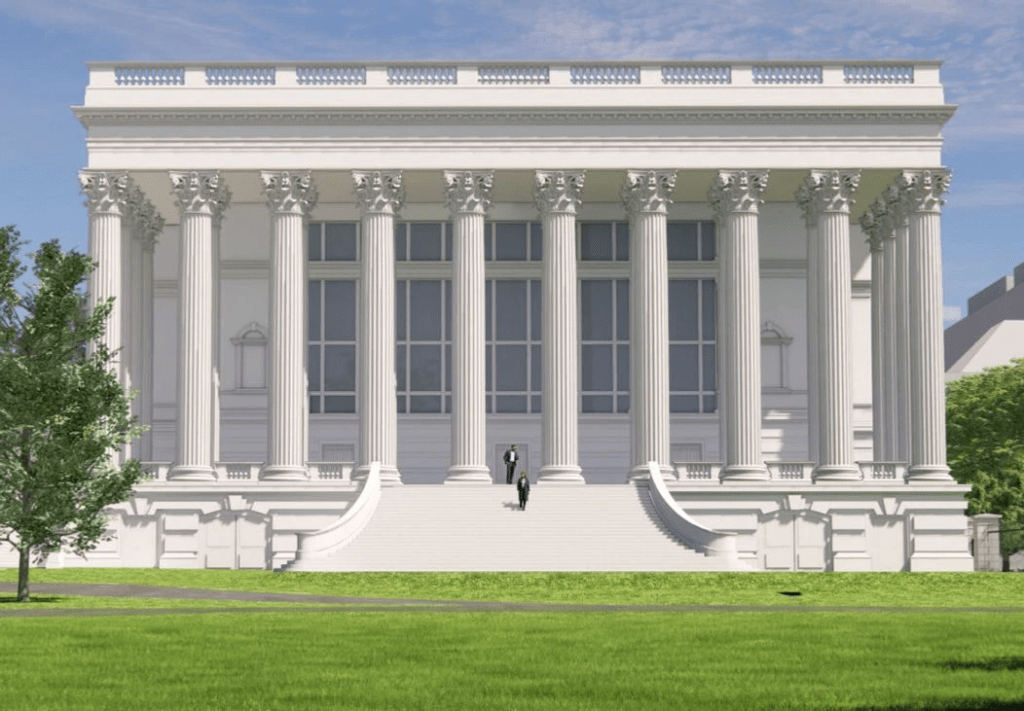
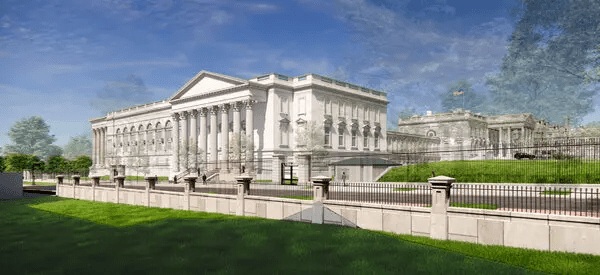
WASHINGTON, D.C. — President Donald Trump has released another architectural rendering of a proposed White House ballroom, promising the project will be “on budget and ahead of schedule” — and funded entirely by private donors.
The plan calls for construction near the East Wing of the White House, replacing the need for large temporary tents often erected on the South Lawn for state dinners and formal events. The ballroom, projected to cost roughly $300 million, would serve as a permanent venue for inaugurations, diplomatic receptions, and major ceremonies.
Supporters frame the project as long overdue modernization. Critics call it unnecessary — and now a federal court may have the final say.
What the Proposal Includes
According to reporting from Fox Baltimore and other outlets, the ballroom would be funded through private donations rather than congressional appropriations. The administration says the design would complement the White House’s neoclassical style, offering a large-capacity space suitable for state-level gatherings that currently strain existing rooms like the East Room.
The president has emphasized two key points:
- No taxpayer funding
- No delay to other federal operations
The administration argues that major events currently require costly temporary structures and logistical workarounds, making a permanent ballroom more efficient in the long run.
Legal Questions Before the Court
The proposal now faces scrutiny in the U.S. District Court for the District of Columbia. According to The Independent and KATV, a federal judge could rule soon on whether the project can proceed without additional congressional authorization or review under federal preservation laws.
Opponents argue the project may require further oversight under:
- The National Historic Preservation Act
- The Administrative Procedure Act
- Congressional approval for alterations to executive property
The White House maintains it has complied with all required procedures and that privately funded improvements to executive property fall within presidential authority.
The case is being heard in Washington’s federal district court, where judges have previously weighed in on disputes involving executive branch powers and federal property management.
Executive Authority vs. Congressional Oversight
At the heart of the dispute is a broader constitutional question: how much authority does a sitting president have to alter the executive residence?
The Constitution vests executive power in the president, but Congress controls appropriations and has historically exercised oversight over structural changes to federal buildings. The tension between modernization and preservation is not new — prior administrations have made substantial renovations, though typically through congressional channels.
Supporters of the project argue:
- Private funding avoids burdening taxpayers.
- A ballroom enhances America’s diplomatic capacity.
- The executive branch should maintain discretion over operational improvements.
Critics counter:
- The White House is a historic national symbol, not a private estate.
- Major structural changes demand bipartisan transparency.
- Even privately funded projects can trigger statutory review requirements.
Political Optics in an Election Cycle
The announcement comes during a politically charged season in Washington. As the president campaigns for a second term, the ballroom has become more than an architectural project — it is a symbol of competing visions of executive leadership.
For supporters, it reflects confidence and long-term planning. For detractors, it reinforces concerns about executive overreach and branding the presidency.
Regardless of political framing, the next step is legal. A ruling from the D.C. federal court could clarify whether the administration’s interpretation of its authority stands — or whether congressional action will be required before construction can begin.
What Happens Next
A decision from the district court is expected soon. If the court allows the project to proceed, planning could accelerate. If it halts construction pending further review, the issue may move to the D.C. Circuit Court of Appeals.
For now, the latest rendering is public — but the final blueprint depends on the judiciary.
In Washington, even a ballroom can become a constitutional debate.
 Federal City News