
By FCN Staff
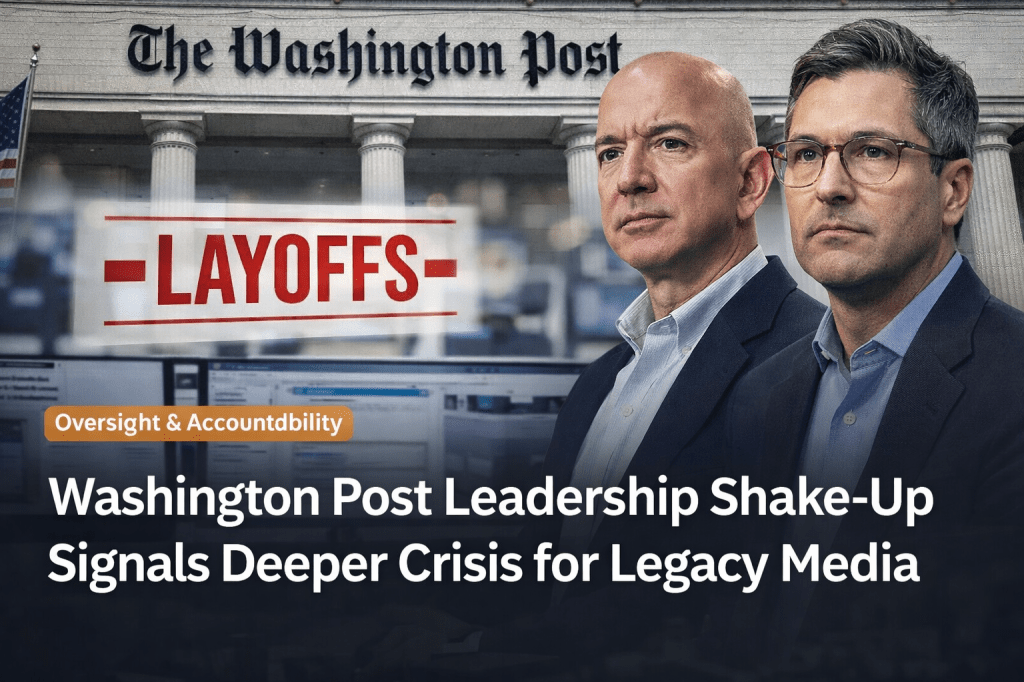
The Washington Post is once again in transition. Publisher and CEO Will Lewis abruptly stepped down this weekend, just days after one of the most severe waves of newsroom layoffs in the paper’s modern history. His exit has prompted both introspection and skepticism about what the Post’s future will look like under new leadership.
Lewis’s tenure was always destined to be difficult. Tasked with stabilizing a storied news institution amid ongoing financial challenges, he presided over widespread cuts that eliminated roughly a third of the newsroom and shuttered key departments — moves that sparked internal rebellion and public criticism from unions.
From a center-right perspective, the core issue isn’t that the Post is shrinking — newspapers across the ideological spectrum are grappling with the digital age’s economics — it’s how leadership handled the transition. The optics were poor. Major cost-saving moves were announced internally while Lewis was conspicuously absent, even photographed at a high-profile event as newsroom morale tumbled.
Under new acting CEO and publisher Jeff D’Onofrio, the Post needs a reset that goes beyond staffing and costs. D’Onofrio arrives with a technology and business background, not deep newsroom roots, signaling a continued focus on finding a sustainable business model.
This moment also raises broader questions about the role of big-budget national media outlets in our political ecosystem. Conservatives have long criticized legacy outlets for perceived editorial bias; now they have tangible evidence of organizational vulnerability and strategic drift. A revitalized Post could still reclaim a broader trust if it embraces journalistic rigor over partisanship and rebalances its mission toward covering the policies and power centers shaping American life.
At the same time, there is a cautionary lesson here for media consumers of all stripes: when journalistic institutions are managed primarily as tech-inspired businesses rather than as public-serving enterprises, many of the principles that once made them indispensable fall by the wayside. The Post’s leadership change should be a moment of reckoning, not just for its newsroom but for how major media outlets make decisions that affect national discourse.
The paper’s owner, Jeff Bezos, has characterized the transition as an opportunity, but opportunity without clear direction risks repeating the same strategic missteps. For those who care about robust, independent coverage of national governance, the stakes are high — and the Post’s next chapter will matter not just to Beltway readers, but to all Americans who depend on reliable reporting.
Would you like the piece expanded with conservative commentary voices reacting to the newsroom cuts and leadership change?
 Federal City News