By FCN Staff
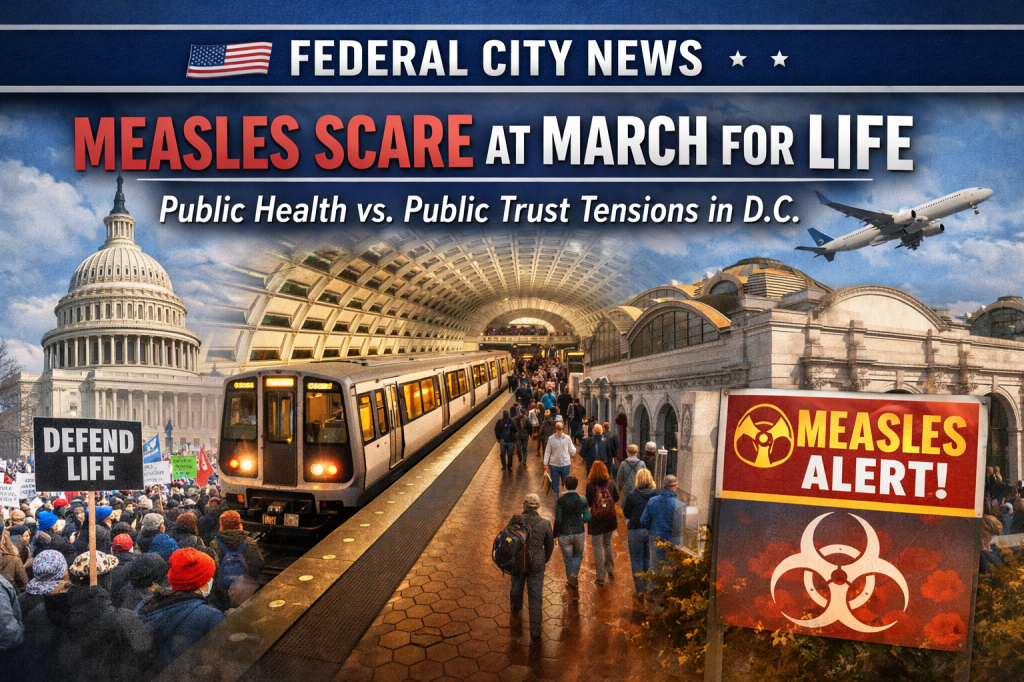
A reported measles exposure tied to the annual March for Life has reignited a familiar — and uncomfortable — debate in Washington: how public health authorities communicate risk without eroding public trust or politicizing routine disease control.
According to a report by NPR, health officials warned that an individual infected with measles may have passed through major transit hubs connected to the event, including Union Station, Reagan National Airport, and the Metro system. The advisory urged potentially exposed individuals to monitor symptoms and check their vaccination status.
On its face, the response was standard public health protocol. But the broader context matters — and that’s where concerns arise.
Routine Health Notice — or Amplified Alarm?
Measles exposures occur regularly in large cities with international travel, dense transit systems, and millions of annual visitors. D.C. is no exception. What raised eyebrows this time was not the advisory itself, but how quickly it became linked — implicitly and explicitly — to a politically sensitive event.
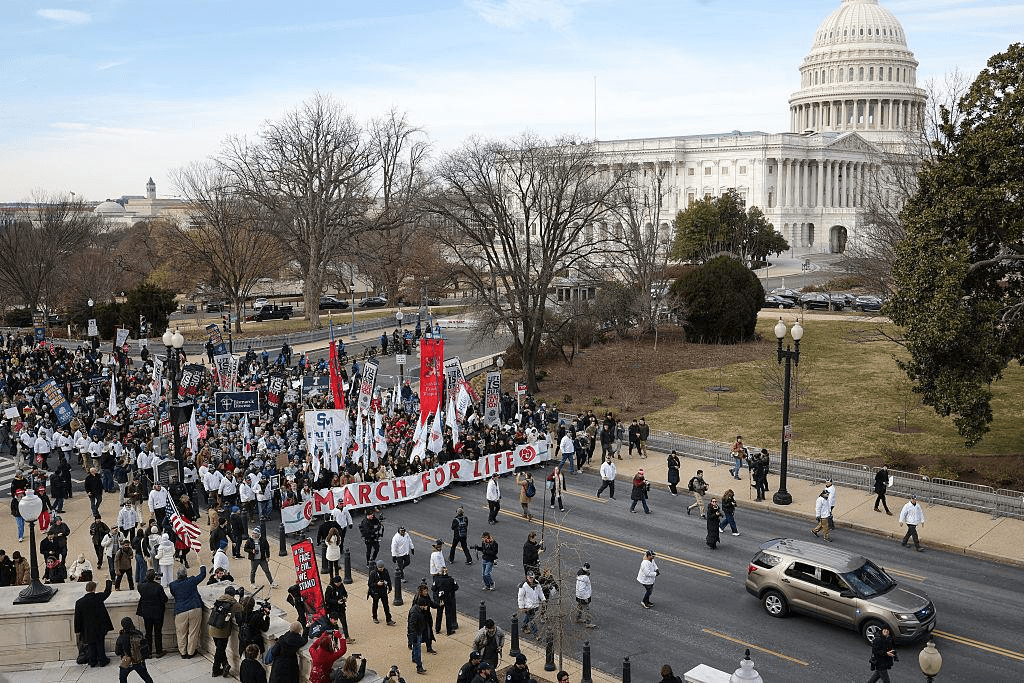
For many observers, the framing risked conflating public health guidance with ideological signaling. Large-scale events across the political and cultural spectrum occur in Washington every year: protests, conventions, marches, and festivals. Few generate national headlines when routine health advisories follow.
Selective amplification fuels suspicion that public health messaging is being filtered through political lenses rather than applied uniformly.
Trust Is the Real Public Health Issue
Public health relies on credibility. When advisories appear selectively emphasized — or framed in ways that suggest moral or political subtext — confidence erodes. That erosion has consequences far beyond measles.
Parents deciding whether to vaccinate their children, travelers assessing risk, and citizens evaluating official guidance all depend on consistent, neutral communication. Overstating risk for some events while downplaying it for others undermines that trust.
This is especially dangerous in a post-pandemic environment where skepticism toward institutions is already high.
Equal Standards, Clear Information
No one disputes the seriousness of measles or the importance of vaccination. But equal treatment matters. If a traveler passing through Union Station on a random weekend poses the same theoretical risk as a protester attending a permitted march, the messaging should reflect that symmetry.
Health agencies serve the public best when they:
- Apply identical standards regardless of ideology
- Communicate risk proportionally
- Avoid unnecessary politicization
- Focus on facts, not insinuations
Washington is a city built on demonstrations. Treating one gathering differently — even unintentionally — sets a precedent that weakens institutional credibility.
The Bigger Picture
The real lesson here is not about measles, but about governance. In a polarized era, even neutral systems are viewed through political filters. Public health authorities must be especially careful not to reinforce that perception.
Clear rules. Neutral language. Equal application.
That’s how trust is preserved — and how public health actually works.
Federal City News will continue monitoring how agencies balance health guidance with public accountability in the nation’s capital.
 Federal City News