By FCN Staff
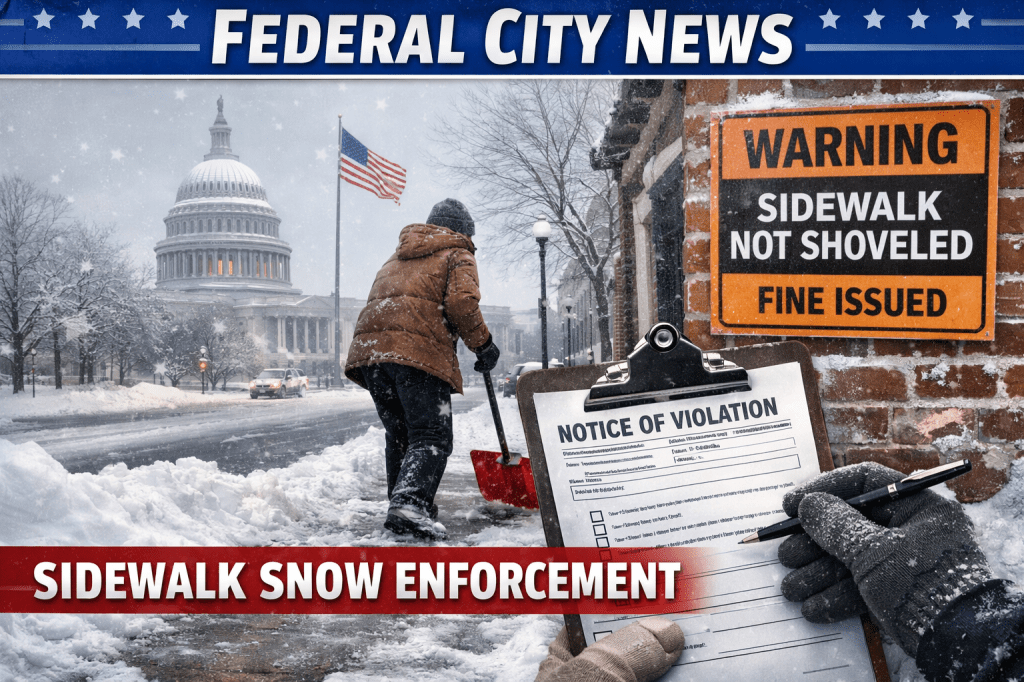
Washington, D.C. has begun issuing fines to residents and businesses that failed to clear snow and ice from sidewalks following recent winter weather—marking a renewed push by the District to enforce longstanding snow-removal rules.
According to city officials, property owners are required to clear sidewalks adjacent to their properties within eight hours after snowfall ends (or within 24 hours for overnight snow). Failure to comply can now result in civil fines, inspections, and potential enforcement actions.
While the requirement itself is not new, the District’s decision to escalate enforcement has drawn criticism from residents and business owners who say the city is shifting responsibility—and costs—onto taxpayers without offering adequate support or flexibility.
Enforcement Over Assistance
The District argues that unshoveled sidewalks pose serious safety risks, particularly for seniors, people with disabilities, and commuters navigating icy conditions. Officials say enforcement is necessary to ensure accessibility and reduce slip-and-fall injuries.
Critics, however, question why enforcement appears to be the city’s first resort rather than its last.
Many residents point out that the District routinely struggles with timely snow removal on public roads, bus stops, and curb ramps—areas fully under government control. Yet enforcement efforts are often aimed at private property owners, including elderly residents and small businesses already facing high operating costs.
“This feels less like public safety and more like revenue collection,” one Dupont Circle business owner told Federal City News. “We’re being fined while the city hasn’t even cleared nearby crosswalks.”
Disproportionate Impact on Small Property Owners
Fines can range from warnings to escalating penalties depending on severity and repeat violations. For large commercial landlords, these costs may be negligible. For small property owners, renters responsible under lease agreements, or seniors living on fixed incomes, they can be significant.
Advocates argue that the District’s approach fails to account for real-world challenges, including:
- Residents who are physically unable to shovel
- Property owners who were out of town during storms
- Delays caused by ongoing snowfall or refreezing
- Limited access to affordable snow-removal services
Rather than expanding assistance programs or providing clearer outreach, the city has leaned heavily on enforcement—fueling concerns about fairness and equity.
A Broader Governance Question
The sidewalk enforcement push also raises a larger policy question: What is the appropriate balance between individual responsibility and government obligation in public safety?
Sidewalks are part of the public right-of-way, yet their maintenance burden falls largely on private citizens. Critics argue that if the city is going to treat sidewalk clearance as a public safety mandate, it should be prepared to shoulder more of the responsibility—especially during major storms.
Others warn that aggressive ticketing risks eroding public trust at a time when many Washingtonians already feel overtaxed and under-served.
What Comes Next
District officials say inspections and enforcement will continue after future snow events, and residents are encouraged to report violations through the city’s 311 system.
For now, the message from City Hall is clear: shovel promptly—or pay up.
Whether that approach improves safety or simply deepens frustration remains an open question for a city still grappling with how best to manage basic services during winter weather.
 Federal City News