By FCN Staff
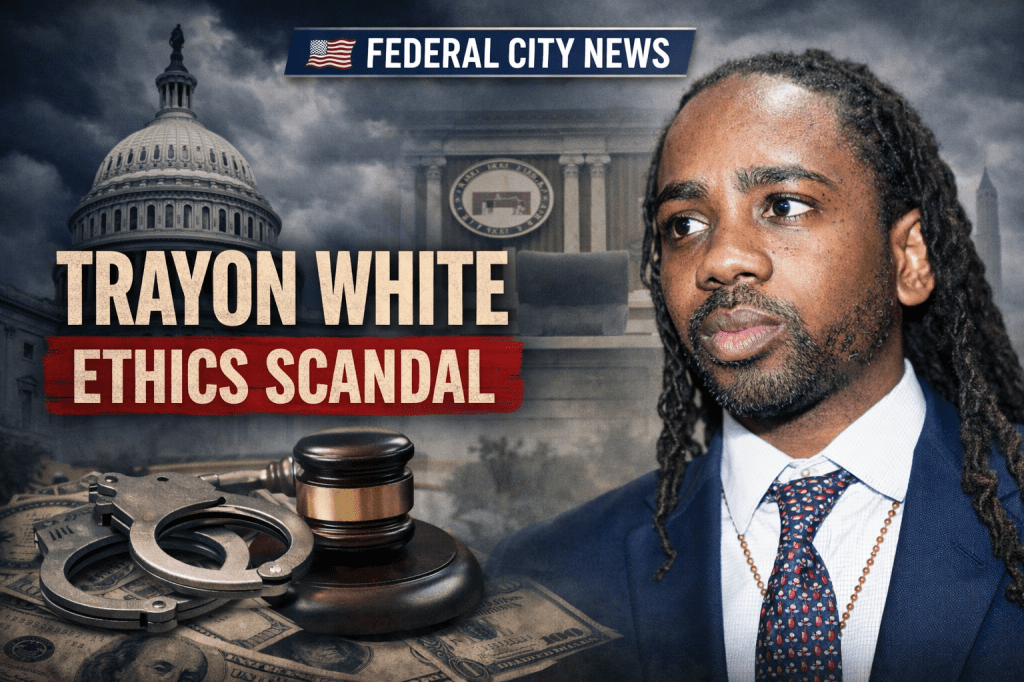
The ethics crisis surrounding Ward 8 Councilmember Trayon White continues to deepen, as a federal hearing tied to alleged bribery and financial disclosure violations stretches on—leaving constituents, taxpayers, and the D.C. Council with more questions than answers.
White, who has represented Ward 8 since 2017, is facing federal scrutiny over allegations that he accepted improper payments connected to nonprofit funding and youth rehabilitation initiatives. Prosecutors allege that White steered public resources and political support toward certain entities while failing to properly disclose financial interests—conduct that, if proven, would violate both federal law and the ethical standards expected of elected officials.
Yet despite the seriousness of the allegations, the case has become bogged down in procedural delays. A federal hearing originally expected to advance the matter has been postponed, prolonging uncertainty for Ward 8 residents and reinforcing a familiar pattern in Washington: accountability deferred is accountability denied.
A Governance Problem, Not Just a Legal One
While White has not been convicted and retains the presumption of innocence, the ongoing delays highlight a broader governance failure inside the District. The Council of the District of Columbia has taken limited visible action while one of its members remains under a federal ethics cloud.
For residents of Ward 8—one of the city’s most economically vulnerable areas—the situation is particularly troubling. Federal and local funds intended for youth rehabilitation and community development are supposed to be guarded carefully, not entangled in allegations of self-dealing or political favoritism.
The issue is no longer just whether White broke the law. It is whether D.C.’s political leadership is willing to enforce meaningful ethical standards on its own members before federal prosecutors are forced to step in.
Transparency Still Missing
At the center of the case are questions about financial disclosure and nonprofit relationships—areas where transparency should be absolute. Financial reporting requirements exist to prevent exactly this kind of scenario: public officials leveraging their positions for personal or political benefit while taxpayers remain in the dark.
Instead, District voters are left watching a slow-moving federal case while the Council appears content to wait it out. That posture risks eroding public trust not only in one councilmember, but in the institution as a whole.
Why This Matters for Washington
Washington, D.C. routinely demands greater autonomy, expanded self-governance, and even statehood. Those arguments rest on the premise that the District can police itself ethically and responsibly.
Cases like this undermine that claim.
When allegations of bribery and financial misconduct linger unresolved—and when local leadership declines to impose internal consequences—the message to residents is clear: political insiders play by a different set of rules.
For Ward 8 taxpayers and District residents alike, the expectation is simple. If an elected official is under serious federal investigation tied to public funds, the Council should not hide behind delays and legal technicalities. Ethics enforcement should be proactive, transparent, and swift.
Until that happens, the Trayon White case will remain more than a legal matter—it will stand as another test of whether Washington’s local government is serious about accountability or merely comfortable with postponing it.
 Federal City News